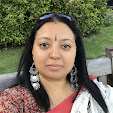
I wrote this article almost a year ago and it was published in the Oasis, but for some reason, I missed out on posting it on my blog. So here it is.
How Living in Egypt, Changed My Life
- Karishma Pais (Kim)
Egypt has been here for many Millennia before you and will be here for many Millennia after you, hence do not expect Egypt to adapt to you, but you will have to adapt to Egypt.
At times, living in Egypt can be really challenging: like, when a plumber is coming in for the 6th time to do the same job that he hasn’t done properly the last 5 times and may not do properly the next 10 times, when you are stuck in traffic for over 15 minutes, because someone wants to come in the wrong way on a one-way street, when you are kept waiting indefinitely at meetings for people who haven’t arrived. Most of us have faced these problems and more and find a lot of them to be unique to Egypt. But if we try to look at the positive aspects of a work/study stint, we just might be able to balance the scale a bit.
What has living in Egypt taught me and others in the same felucca as me?
Patience is a Virtue: In these days of “Instant Gratification”, in most countries around the world, it is easy to forget how complicated it actually is, to get so many things that we take for granted. In Egypt, taking time to get things done has been perfected to an art form. Except when driving, from Point A to Point B. In all other cases, how long something will take to be achieved, is all in God’s hands.
Pick your Battles Wisely: There are some battles that just cannot be won. Like the one against dust. Choose which ones are worth the fight and which ones are just going to leave you more stressed with no change in outcome. Only focus on the first and ignore the second category or work around it. This is essential for your sanity, blood pressure and health. (Tip: Karkade tea is supposed to be good for controlling blood pressure)
Sometimes, it is better to rely on yourself: Although all kinds of help and services are easily available in Egypt, sometimes the quality isn’t as great as you may be used to. No amount of meticulous explanations and supervision may help in getting things right, in these cases it is better to do it yourself. Some things may seem important and essential to you, but not to the people around you. Do it yourself. For e.g.: in some parts of Maadi it is essential for your safety to ground the electric mains, so you do not suffer from exploding light bulbs. If your landlord isn’t willing to bear the expense, do it yourself or shift to another house (which comes with another set of complications. So consider your options carefully)
Sometimes, it is better to cut your losses and move on: If things are just too much to put up with, it is better to leave. A friend found that her house flooded every Sunday when the people above drained their terrace swimming pool and the building pipes couldn’t take the pressure. No amount of reasoning or pleading would get them to release the water from the pool gradually. For the sake of her furniture and the family’s health, they needed to move. At some point, you may hire someone to get some work done for you (carpenter/plumber), but as time passes you may realize that they just aren’t doing the job the way you want it done or just not doing the job at all. While you may have paid an advance to this person, and may not be able to get back any of it, it may still be better, to just find someone else.
Its Just Money: At times you may feel like you are being grossly overcharged for food, products or services, but if this is what makes you happier, indulge, as long as you balance it out somewhere else in your budget. If a bag of imported chocolate is twice the price of Galaxy chocolate, but you just have to have your Reeces Peanut butter cups, then indulge. If you have found the perfect hairdresser, but she charges 3 times as much as the woman around the corner, but the perfect hair-do will boost your self-esteem, confidence and overall mood, indulge. But remember, nothing is worth getting into debt over.
Keep your Eyes Open: For photo opportunities, for areas where you can help bring a positive change, for opportunities to help or learn, for people who just want your money. Be aware of your surroundings. Egypt is a country full of surprises, you never know what you may find around the corner.
Benefit of the Doubt & Letting Go: Sometimes it may feel like the whole country is out to get you. Give people the benefit of the doubt; it will leave you in a better frame of mind. The only people, who get hurt when you are stressed or angry, are your family and closest friends. So give people and situations the benefit of the doubt and sometimes you will find it is better to just let go, instead of dwelling on particular incidents.
Living in a Bubble: This is the most effective advice I heard from some friends who have been in Egypt much longer than me. Living in a bubble, need not mean something as drastic as living in a gated expat oriented community in the suburbs and never leaving the premises, except to go to the airport or to try another golf course for a change. A bubble is more about surrounding yourself with the things that you like, things and people that keep you positive, things that do not upset your inner balance whether emotional, spiritual, mental or physical. The only downside of living in a bubble is that you may miss out on a lot of interesting experiences, so do give new things a try.
The best advice I could give anyone in any country in the world is to recognize your bubble. Then, treat your bubble as your center of equilibrium. Step out of it occasionally and you may find your bubble growing larger gradually, over time. Step out of it frequently, to have a more enriching life experience, but know that you have the bubble to retreat into when necessary.
Karishma Pais (Kim) consults on HR projects, delivers intercultural training at the CSA, counsels new and experienced expats, writes for several magazines – online and offline. She runs whazzupcairo@yahoogroups.com and whazzupcairo@googlegroups.com among other activities. Her Social Commentary and blog about life in Egypt can be read at http://whazzupegypt.blogspot.com